
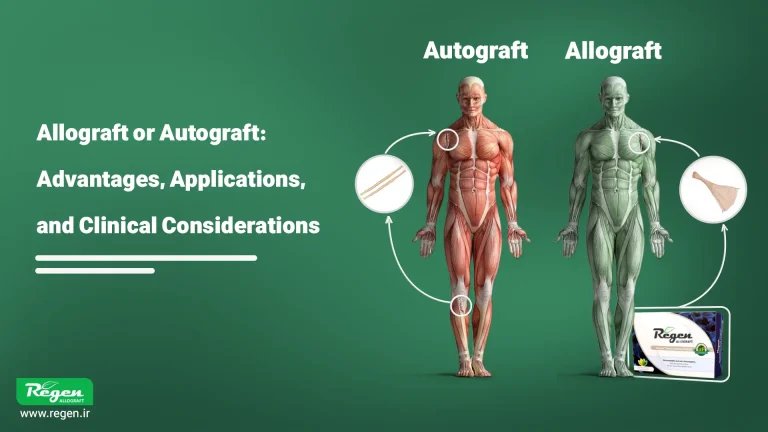
Allograft or Autograft: Advantages, Applications, and Clinical Considerations
Tissue grafting is one of the most effective therapeutic approaches in orthopedic surgery, dentistry, and the reconstruction of damaged tissues. There are two main methods in this field: autograft (using the patient’s own tissue) and allograft (using tissue donated from another individual). Understanding the differences and advantages of each method is essential for surgical planning and selecting the most appropriate treatment option.
Fundamental Differences Between Autograft and Allograft
Autografts are performed using the patient’s own tissue and offer significant safety advantages, including the absence of immune reactions and tissue rejection, as well as eliminating the risk of infectious disease transmission. However, autografts have limitations, especially in complex or extensive surgeries, such as when large tissue volumes are required or when complications may arise at the donor site. In contrast, allografts overcome these limitations, providing the possibility to supply tissue of any required size and type.
Allograft refers to the use of tissue donated from another individual. Although this approach requires careful immune management and sterilization processes, it offers significant advantages that make it the preferred choice in many surgical scenarios.
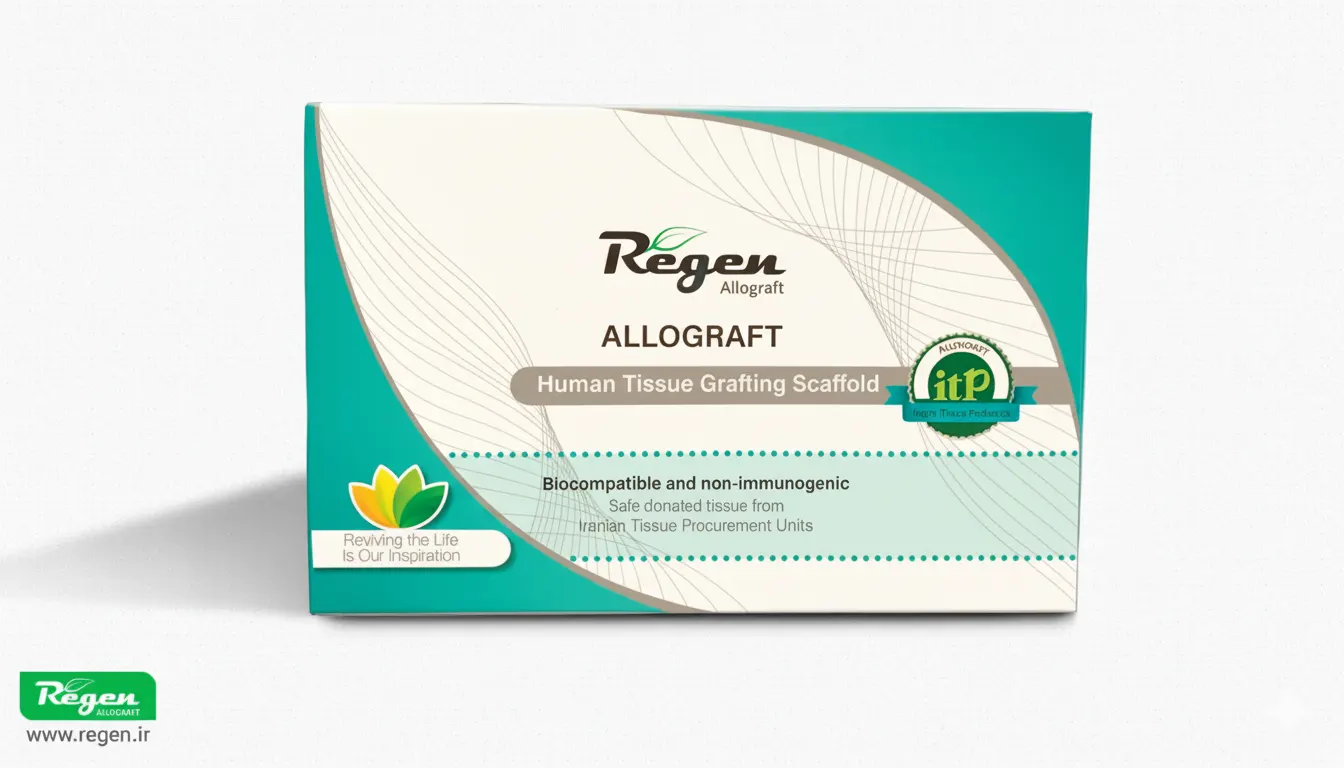
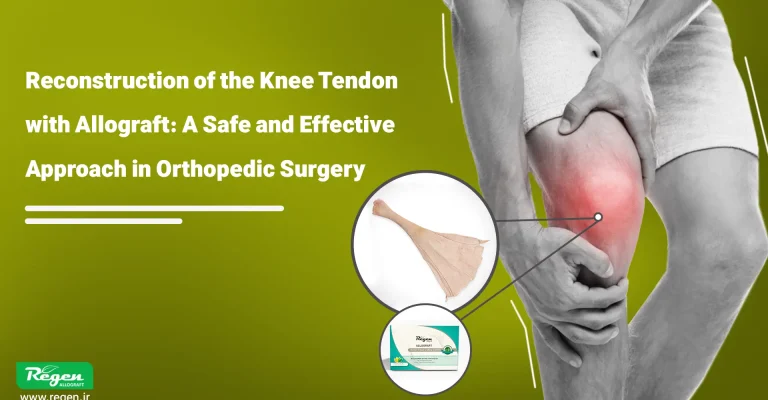
Regen Allograft Tendon Product
Advantages of Allograft Compared to Autograft
1. Wide availability with no volume limitations
Allografts are readily available in tissue banks and can provide sufficient volumes of various tissue types, such as bone, cartilage, skin, and tendon. Unlike autografts, which are limited by the amount that can be harvested from the patient’s body, allografts have no restrictions on the quantity or type of tissue used and can be employed in extensive, multi-stage, or emergency surgeries.
2. Reduced Surgical Time
By eliminating the need to harvest tissue from the patient’s body, the duration of surgery and anesthesia is significantly reduced, thereby decreasing the likelihood of complications associated with prolonged procedures.
3. Elimination of Donor-Site Complications
Allografts eliminate pain, infection, and complications at the donor site, as all tissues are sourced from tissue banks and there is no need to harvest tissue from the patient’s body.
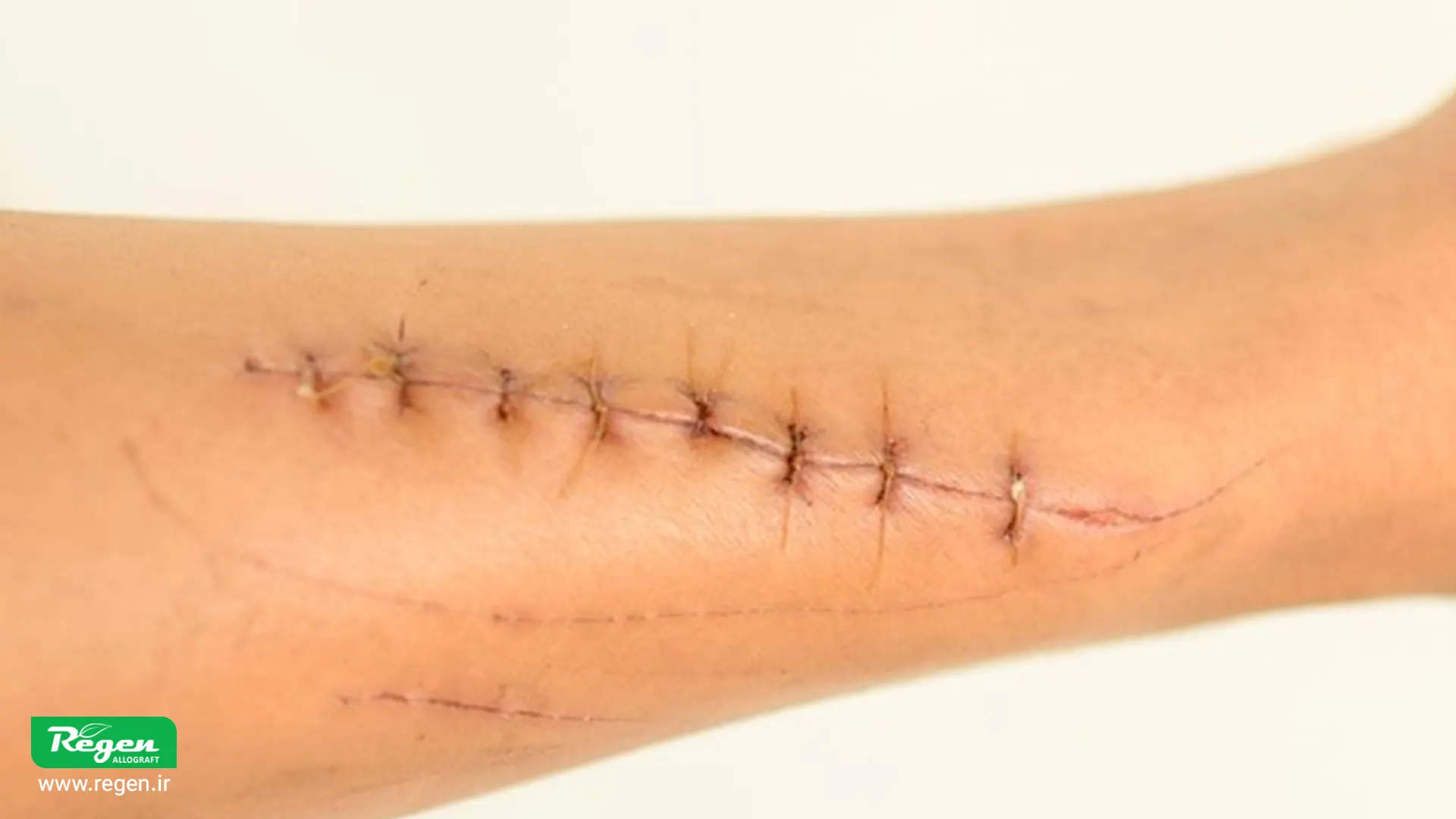
Scarring from Autograft Harvesting
4.Use in Special and Emergency Situations
Due to their ready availability and long-term storage capability, allografts are an ideal option for emergency surgeries, extensive repairs, and patients with special conditions, such as the elderly or those with underlying medical issues.
5.Variety in Tissue Type Selection
Tissue banks provide the ability to choose from a variety of tissue types, such as cortical bone, cartilage, skin, and tendon, allowing surgeons to select the most precise and suitable option based on the specific type of surgery.
6.Standardization and High Quality
Allografts are produced and stored under controlled and sterile conditions. These processes help preserve the natural tissue structure, ensure mechanical strength, and provide high biocompatibility.
7.Reduced Physical and Psychological Risks
By eliminating the need to harvest tissue from the patient’s body, pain, stress, and patient anxiety are significantly reduced, making the surgical experience safer and more comfortable.
Clinical Considerations and Recent Advances in Reducing Graft Rejection
One of the main challenges in using allografts is the potential for immune reactions and tissue rejection. However, recent advances in (decellularization) processes have largely addressed this concern. In this procedure, all living cells are removed from the donated tissue, leaving only the extracellular matrix (ECM)—a natural, biocompatible structure free of immune-stimulating antigens.
In line with this, Iranian Tissue Products Company, by utilizing advanced technologies in the production of acellular allografts, has been able to minimize the risk of graft rejection. Their products preserve the tissue’s microscopic structure while completely removing all cells, demonstrating high immunocompatibility and excellent clinical success across a variety of therapeutic applications.
–
Features | Autograft | Autograft |
|---|---|---|
| Tissue Origin | From the patient’s own body (Autograft) | -From a human donor (Allograft) |
| Immune Rejection Risk | -Almost zero; compatible with the patient’s immune system (Autograft) | -Minimal risk of rejection (Allograft) |
| Risk of Disease Transmission | -No risk (Autograft) | -Low risk (Allograft) |
| Surgery Duration | Longer, due to tissue harvesting from the patient’s body (Autograft) | Shorter, as no tissue harvesting is required (Allograft) |
| Donor-Site Pain and Complications | Pain and potential infection at the harvest site (Autograft) | No donor-site complications (Allograft) |
| Tissue Availability | Limited to the amount that can be harvested from the patient’s body (Autograft) | Unlimited, can be supplied from tissue banks (Allograft) |
| Use in Extensive Surgeries | Limited applicability (Autograft) | Highly suitable for large-scale and emergency reconstructions (Allograft) |
| Recovery Time | Faster recovery due to immune compatibility (Autograft) | Tissue integration may take slightly longer (Allograft) |
Summary
Although autografts offer significant advantages due to immune compatibility and the absence of disease transmission, allografts provide notable benefits in many clinical scenarios. Key advantages of allografts include unlimited availability in terms of tissue volume and type, high accessibility, reduced surgical time, elimination of donor-site complications, tissue variety, standardization, and a lower risk of rejection due to their acellular nature.
The final choice between autograft and allograft should be made based on the patient’s condition, surgical requirements, and the clinical judgment of the treatment team to ensure both safety and treatment efficacy.
Production of Safe and Standardized Allografts
To obtain a variety of acellular allografts with the highest levels of safety and quality, you can rely on the products from Iranian Tissue Products Company. Leveraging advanced tissue processing technologies and international standards, this company ensures safety, efficacy, and high biocompatibility for both patients and surgeons./<
Allograft or Autograft: Advantages, Applications, and Clinical Considerations
Tissue grafting is one of the most effective therapeutic approaches in orthopedic surgery, dentistry, and the reconstruction of damaged tissues. There are two main methods in this field: autograft (using the patient’s own tissue) and allograft (using tissue donated from another individual). Understanding the differences and advantages of each method is essential for surgical planning and selecting the most appropriate treatment option.
Fundamental Differences Between Autograft and Allograft
- Autograft: Uses the patient’s own tissue, with no risk of rejection or disease transmission.
- Allograft: Uses tissue donated from another individual, allowing for a wide range of tissue types and quantities.
Advantages of Allograft Compared to Autograft
1.Wide availability with no volume limitations
Allografts are stored in tissue banks and are available for use at any time. Unlike autografts, there are no limitations on the amount of tissue.
2. Reduced Surgical Time
By eliminating the need to harvest tissue from the patient’s body, surgical and anesthesia time is reduced, and the risk of complications is lower.
3.Elimination of Donor-Site Complications
In allografts, there is no need to harvest tissue from the patient’s body, eliminating pain, infection, and complications at the donor site.
Recommended Product: Regen Allograft Tendon