
Introduction
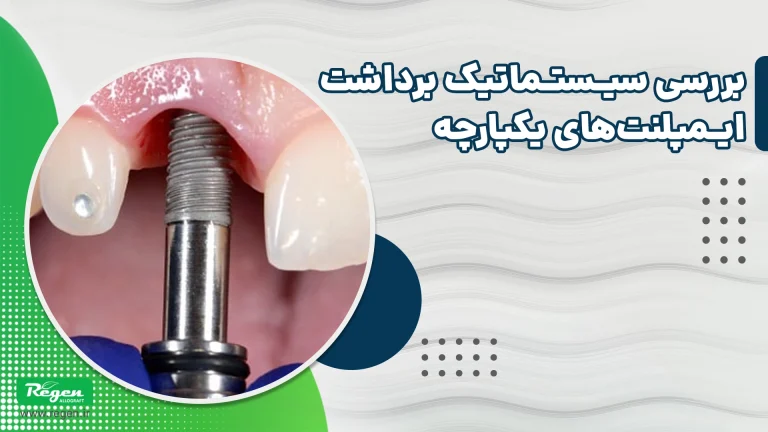
Dental implants are now widely recognized as an effective and long-term solution for treating partial or complete edentulism, often yielding highly satisfactory clinical outcomes. However, in certain cases, biological or mechanical complications can lead to treatment failure and necessitate implant removal. Accurate and up-to-date knowledge of explantation techniques is essential for managing such situations effectively.
Objective of the Study
This study, conducted by Manlio Santilli, Giuseppe Tafuri, and colleagues, aimed to perform a systematic review of the literature published over a 20-year period (2003–2023) to assess the various existing techniques for dental implant removal. The review focused on factors such as the success rate of each method, level of invasiveness, potential complications, and the advantages or limitations associated with each technique.
Findings
Data from 18 articles involving a total of 1,142 implants in 595 patients were analyzed. The primary implant removal techniques included:
- Counter-Torque Ratchet Technique (CTRT)
- Piezosurgical Bone Sectioning (PBS)
- Trephine drills
- Carbide burs
- Er:Cr:YSGG laser
- CO₂ laser
Some studies also explored combinational approaches, such as using piezosurgery with trephine drills or incorporating 3D-printed surgical guides alongside mechanical instruments.
Among all, the CTRT was identified as the most effective method, offering high success rates and minimal bone loss. In many cases, it also allowed for immediate implant placement in the same site.
Background
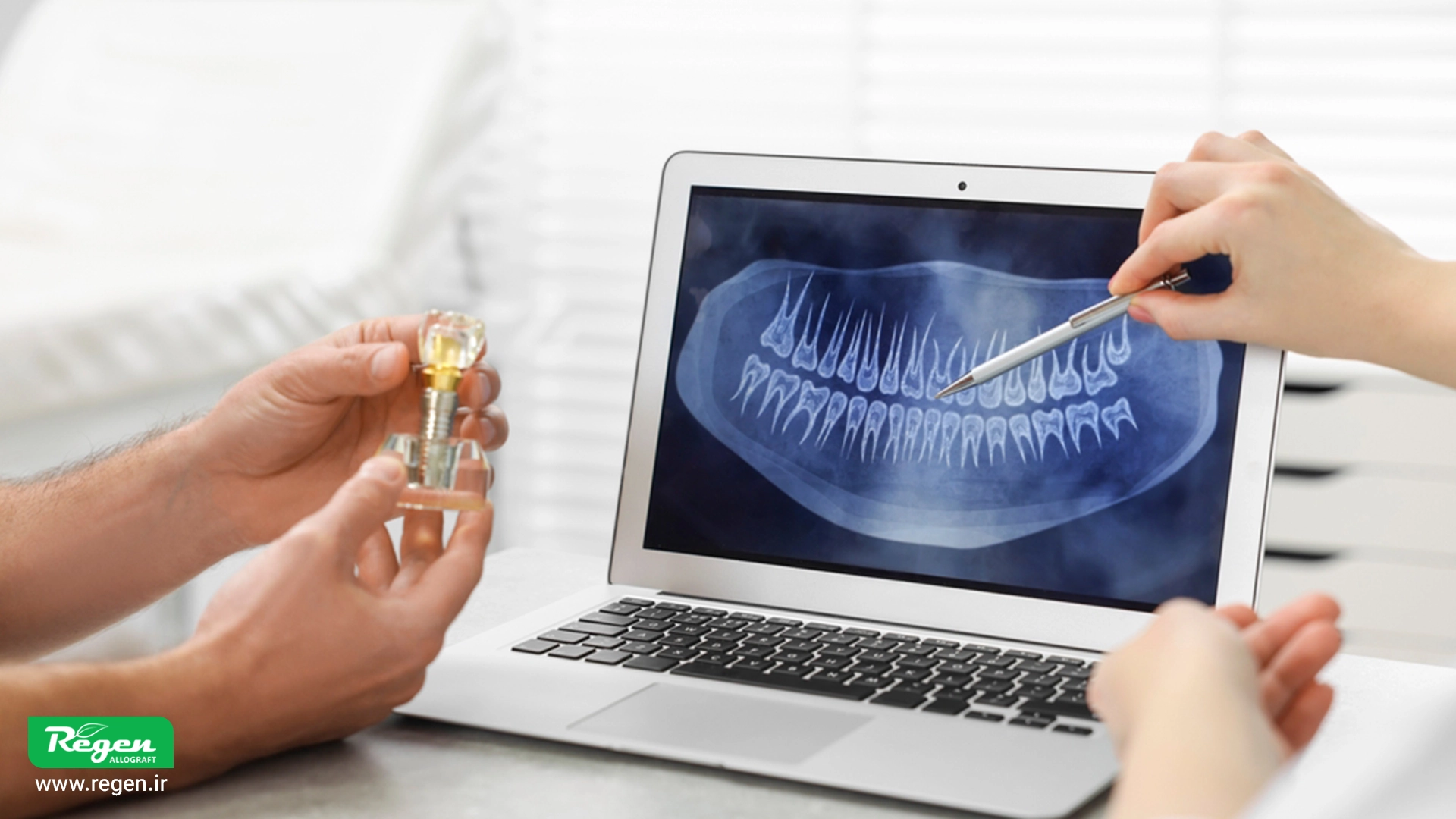
Dental implants have an approximate success rate of 90%, particularly effective in the lower jaw or for replacing a single missing tooth. Nevertheless, implant therapy still presents challenges.
Failures may be classified as:
- Early failure (lack of osseointegration)
- Late failure (loss of previously achieved osseointegration)
The most common cause of late failure is peri-implantitis, an inflammatory process with associated bone loss. Risk factors include smoking, a history of periodontitis, poor oral hygiene, and residual cement.
Proper patient selection, periodontal treatment, and routine maintenance are key to implant longevity.
In cases of incomplete osseointegration, explantation is relatively straightforward. However, when osseointegration is fully achieved, more invasive techniques are required. When reimplantation in the same
site is planned, conservative approaches that preserve the bone are preferred.
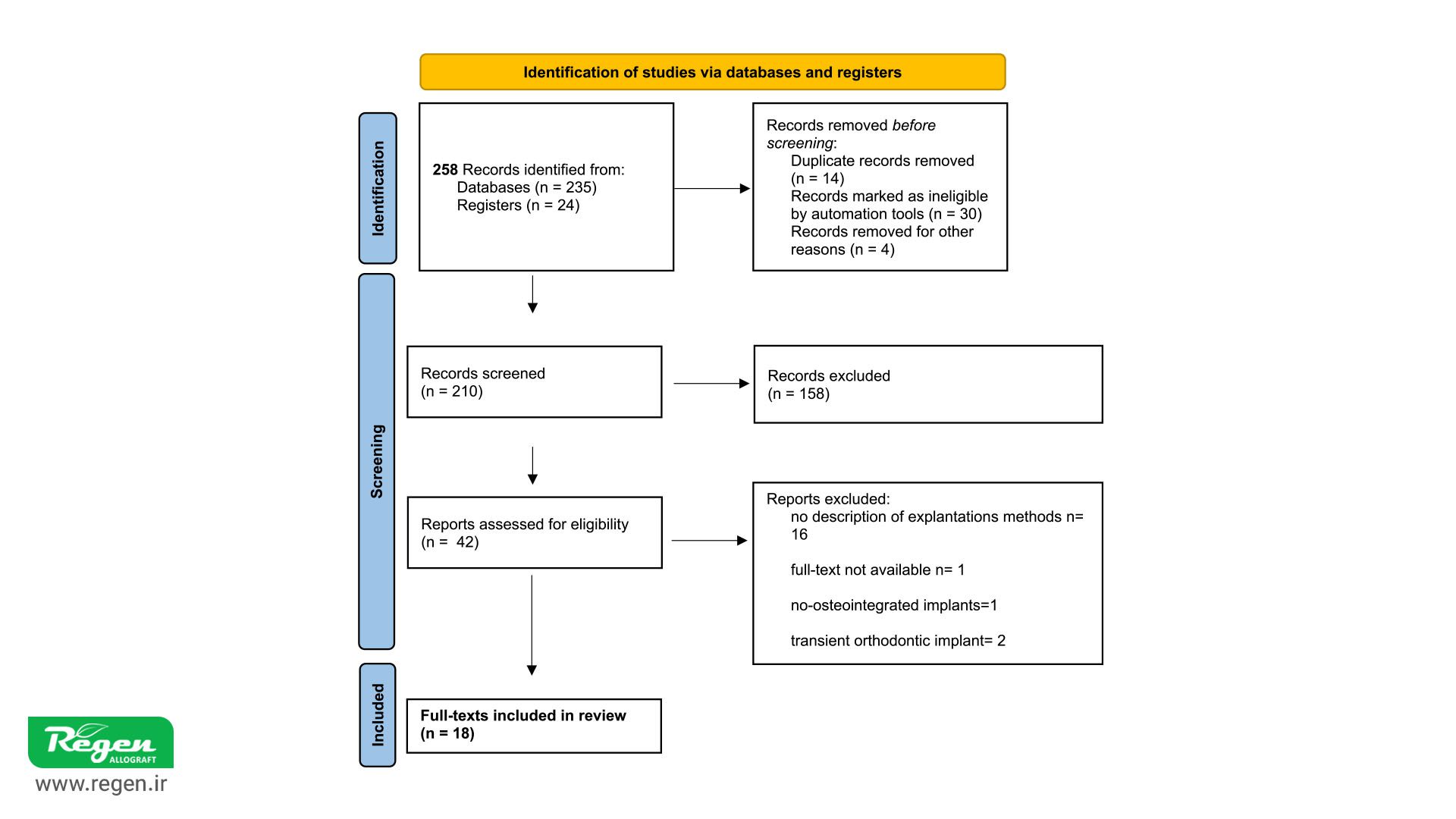
This systematic review was conducted following the PRISMA-P guidelines and based on a PICO-formulated research question. The primary outcome was the success rate of implant removal by techniqu secondary outcomes included residual bone volume and post-operative complications, reflecting the invasiveness of each approach.
Study Inclusion Criteria
Only studies meeting the following criteria were included:
- Focused on human subjects
- Addressed removal of osseointegrated dental implants
- Clearly described the removal technique
- Provided reasons for implant removal
Excluded studies:
- Animal or in vitro studies
- Literature reviews
- Case reports without full text
- Studies on special implants (e.g., zygomatic, pterygoid)
Search Strategy and Study Selection in the Systematic Review
To gather evidence, a systematic search was conducted in the PubMed, Embase, and Web of Science databases. Articles published between 2003 and 2023 were reviewed, using keywords such as “dental implant removal,” “explantation,” and “implant failure.”
Two independent reviewers assessed the articles, and any disagreements were resolved through consensus. The level of inter-rater agreement was measured using Cohen’s kappa coefficient.
During the data extraction phase, information such as study type, number of patients, number of removed implants, removal techniques, technique success rate, and the feasibility of reimplantation was collected.
Out of 258 articles screened, 18 studies of sufficient quality were selected for the final analysis, encompassing a total of 1,141 implants in 594 patients. The primary removal techniques included the Counter-
Torque Ratchet Technique (CTRT), trephine drills, laser, and piezosurgery.
CTRT emerged as the most conservative and widely used method, allowing for reimplantation in the same site. In some cases, it was combined with trephine drills to facilitate removal.
Trephine drills also demonstrated a high success rate (94%), though they were associated with greater bone loss and invasiveness. Other techniques, such as carbide burs, CO₂ lasers, and 3D-printed surgical guides, were effective in specific scenarios but were mostly reported in case studies.
The review indicated that reimplantation following explantation generally yielded favorable outcomes, particularly when combined with guided bone regeneration (GBR). The survival rate of the secondary implants ranged from 71% to 100%.
Factors affecting the difficulty of implant removal included implant length, thread design, and surface type. Roughened surfaces, such as acid-etched or sandblasted implants, required higher torque for removal.
In specific situations—such as implant fracture or torque levels exceeding 200 Ncm—the use of trephine drills was recommended. However, due to their invasiveness, these drills are typically unsuitable for immediate implant placement.
Ultimately, although implant removal does not significantly impact patients’ overall quality of life, some patients may experience hesitation or diminished trust in the original clinic when considering reimplantation.
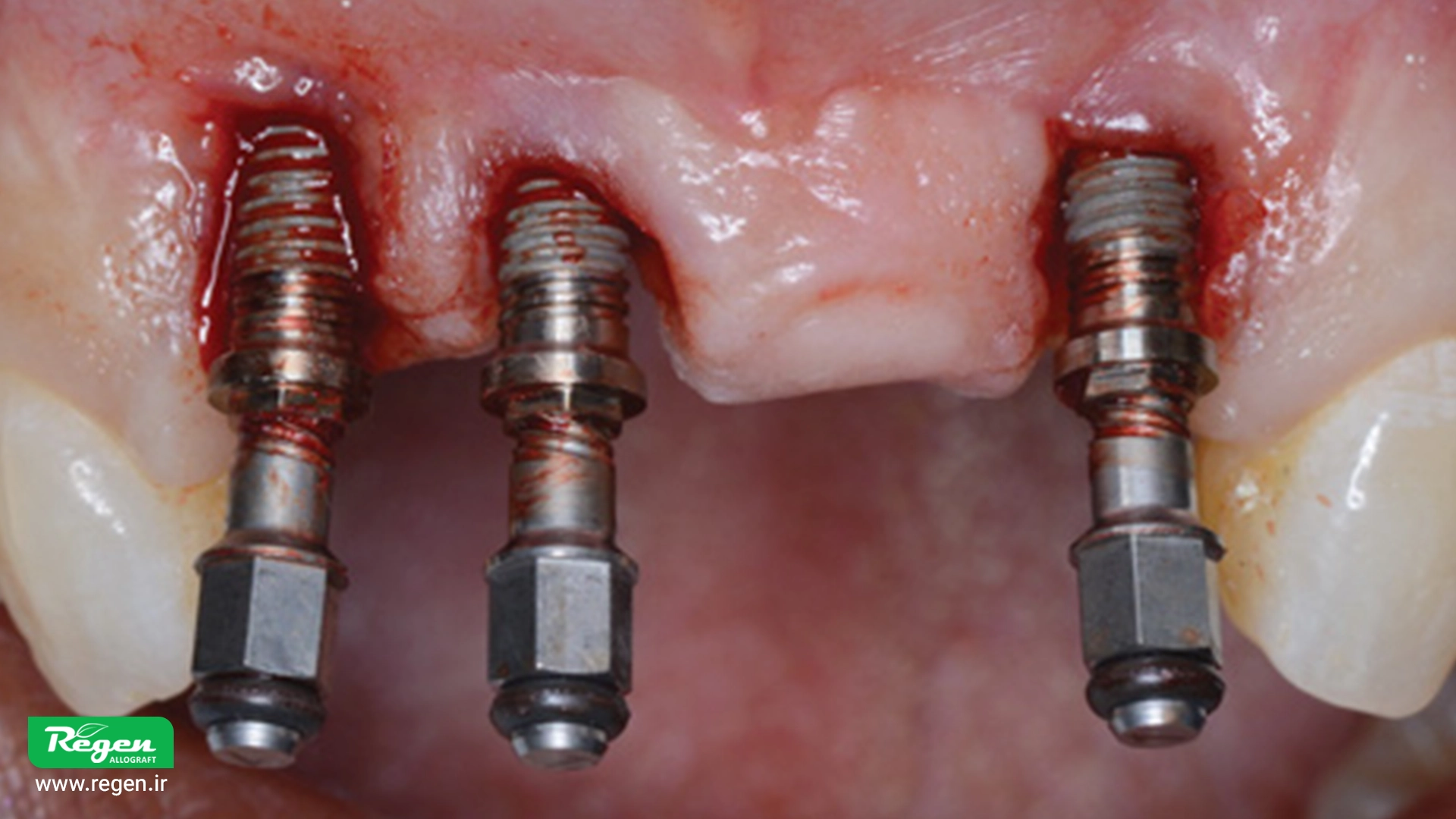
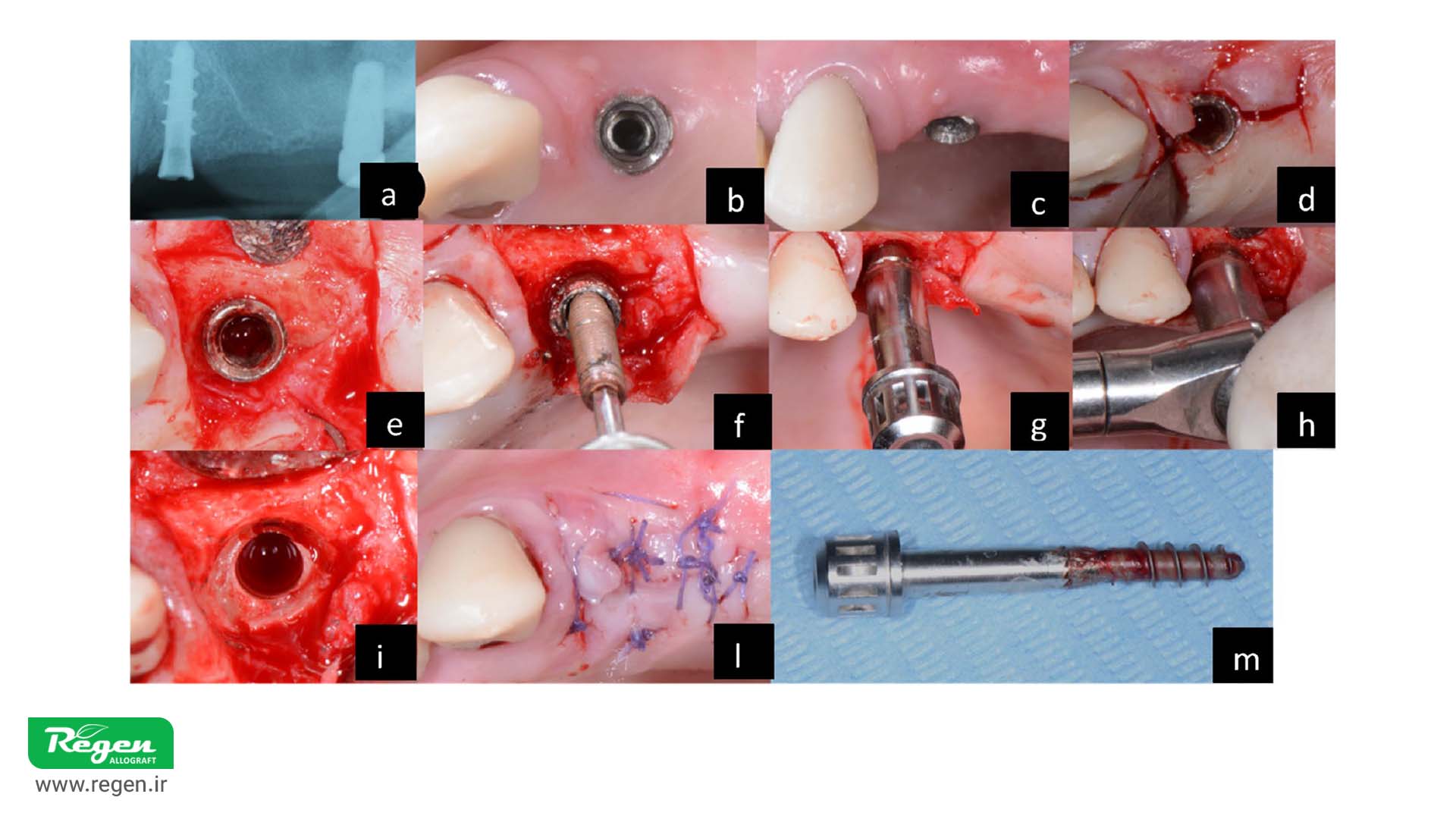
Counter-Torque Ratchet Technique (CTRT) for Dental Implant Removal
The success of implant removal using the Counter-Torque Ratchet Technique (CTRT) depends on several critical factors, including the type of implant-abutment connection, the implant’s shape and geometry, and the degree of osseointegration surrounding the implant. This method is considered one of the most effective and conservative techniques for explantation. However, certain conditions must be met for safe and successful use:
- The implant-abutment connection must be intact.
- Narrow implants may be at higher risk of fracture.
If the connection is compromised or unsuitable, CTRT is not recommended.
The components of a CTRT kit typically include a connection screw, a specialized driver for turning, and a torque wrench that enables precise measurement of the torque required for implant removal. These kits are usually universal and compatible with most implant systems. Examples of such kits include the Straumann® Counter-Torque Kit, Neo Fixture Remover Kit, and BTI Implant Extraction .System
The Application of Laser Technology in Implant Removal
laser technology in dentistry—including implant removal—is recognized as a minimally invasive method that enables precise cutting of both soft and hard tissues. The laser energy is absorbed by water and mineral content in the tissue, leading to vaporization, incision, and coagulation. Advantages of this method include reduced postoperative pain and swelling, improved surgical visibility, and excellent bleeding control. However, the need for specialized equipment and longer operating time are noted limitations.
Studies have shown that laser-assisted implant removal is less invasive compared to other techniques, particularly trephine drills, and results in less bone damage.
Conclusion
Conservative techniques such as CTRT are recommended due to their ability to safely remove implants while preserving bone, often allowing for immediate reimplantation. If reverse torque fails, more invasive approaches can be considered—with utmost caution.
Key factors influencing the removal of osseointegrated implants include implant design, proximity to critical anatomical structures (e.g., the nerve canal or sinus), and plans for future implant placement.
If you are interested in the clinical and research applications of allograft tissue products, we recommend exploring other specialized articles on the Iranian Tissue Product blog.
Reference
Giuseppe Tafuri, Manlio Santilli, Eugenio Manciocchi, Imena Rexhepi, Gianmaria D’Addazio, Sergio Caputi & Bruna Sinjari. A systematic review on removal of osseointegrated implants: an update. BMC Oral Health. 2023; 23:756. doi:10.1186/s12903-023-03438-5