

Particulated Bone
Choose File
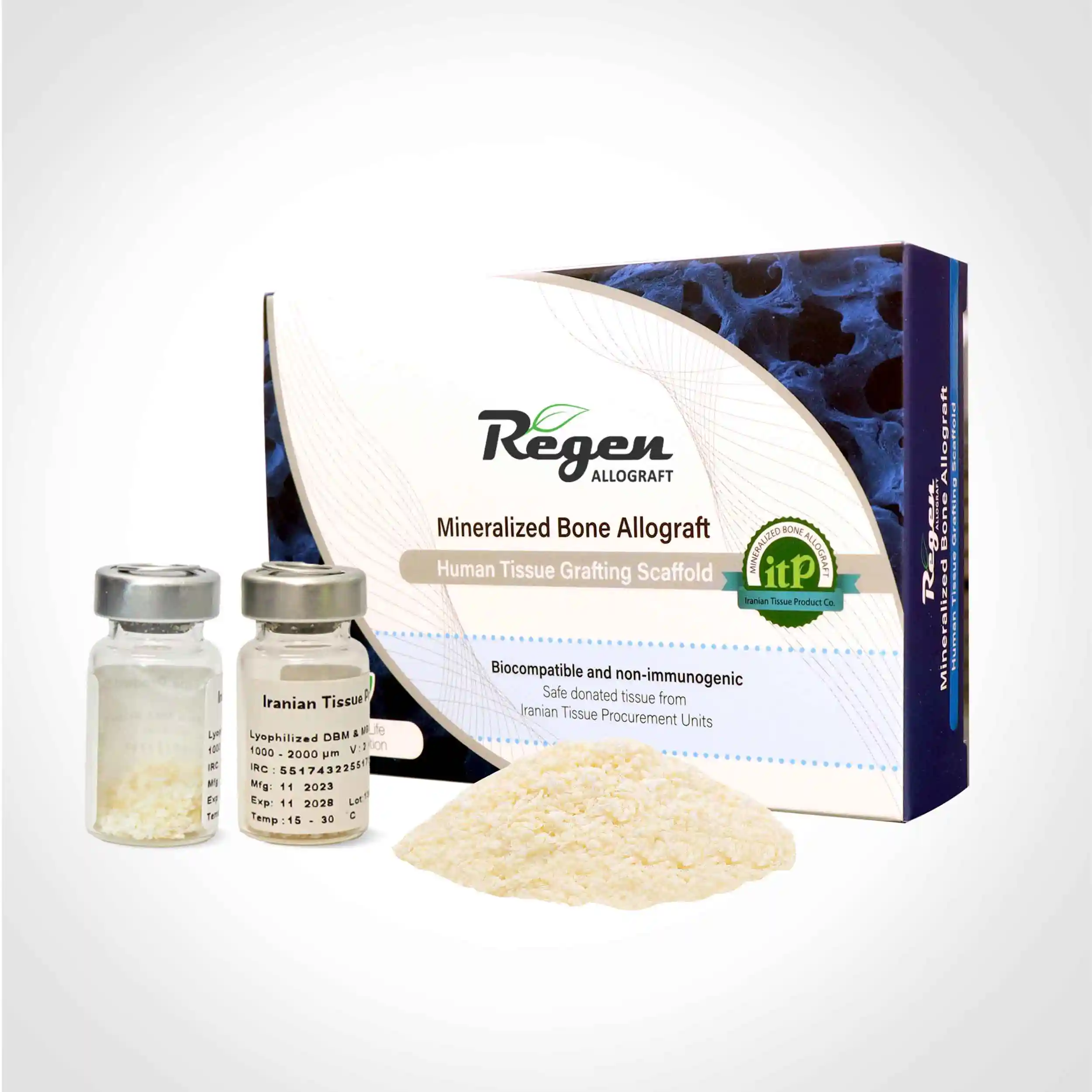
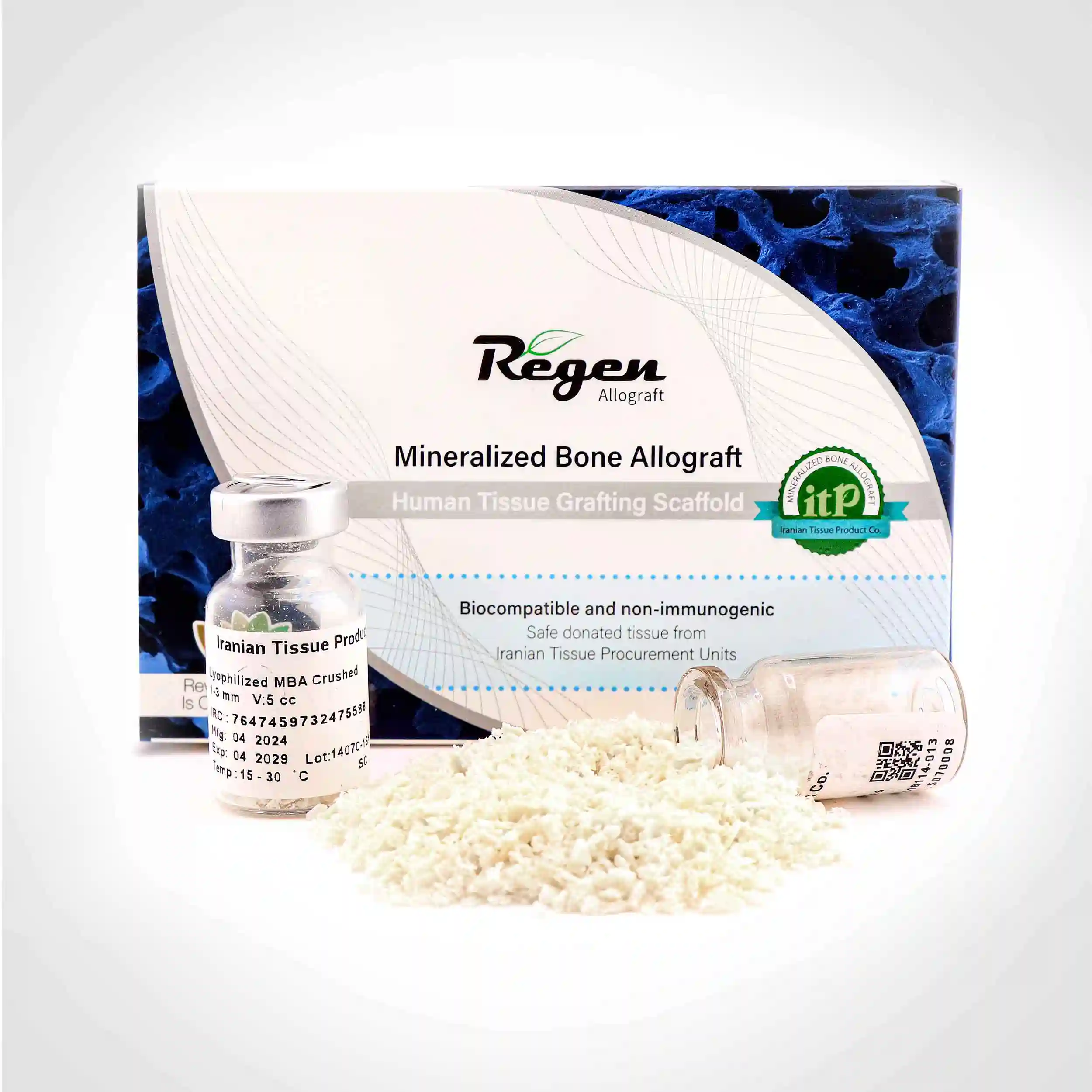
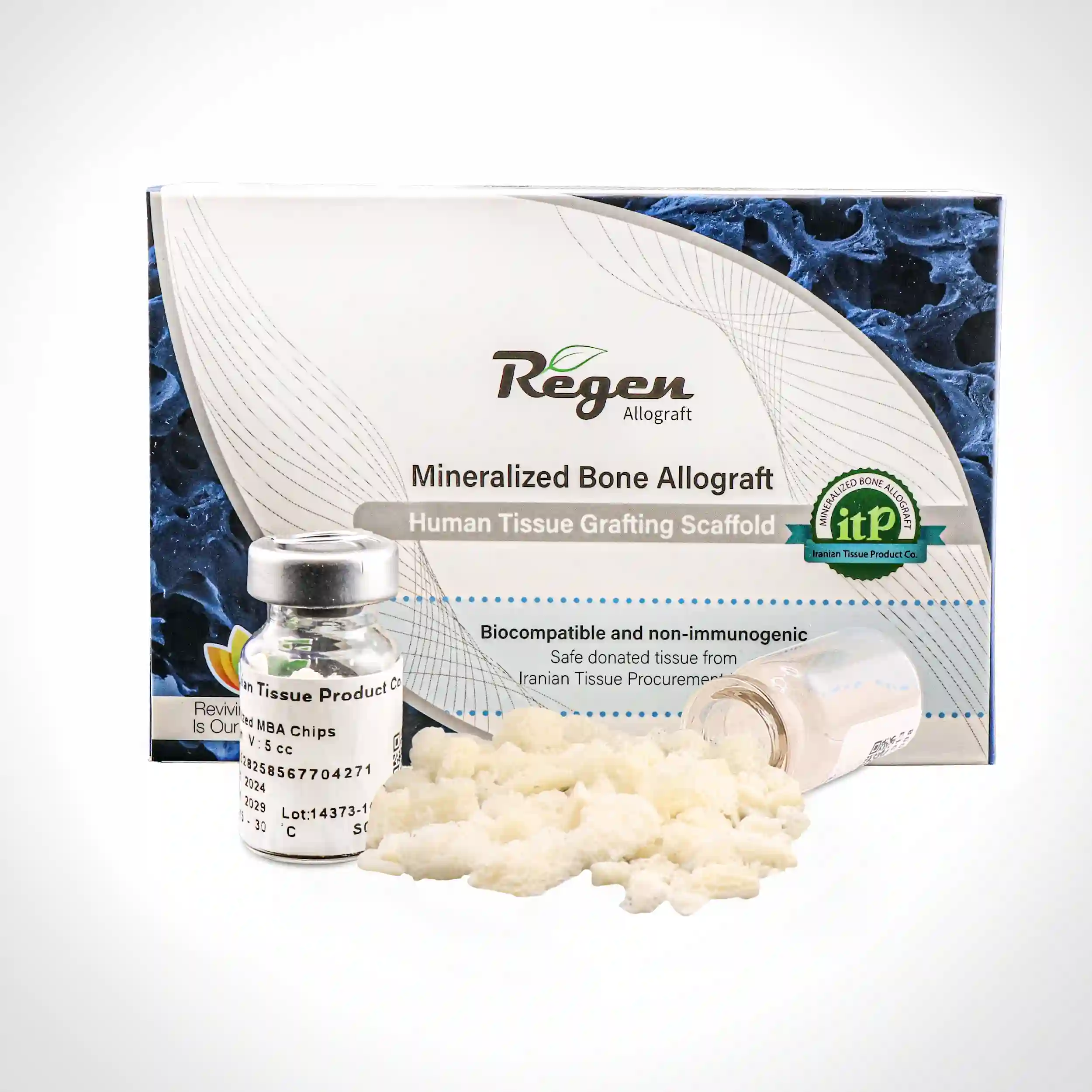


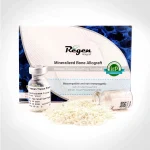

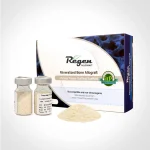
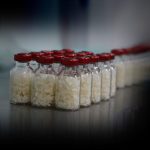
In the field of hard tissue repair and regeneration, the use of bone allografts has gained a prominent role as an effective and safe alternative to autologous bone. One of the most common types of these products is particulate allografts, which are widely used—especially in maxillofacial and dental surgeries—due to their ease of use, adaptability to various bone defects, and favorable biological properties. These products are manufactured in different forms and sizes depending on the bone origin (cortical or cancellous) and processing method (mineralized or demineralized), playing a crucial role in bone regeneration procedures such as GBR, GTR, and sinus lift.
Product Description
Description
Powder allograft products are among the bone allograft products with the origin of cancellous or cortical bones and can be presented in mineralized, demineralized and combination forms. These products are sold in different particle sizes in the particle diameter range of 150 microns to 2000 microns.
Due to the smaller particle size of this group of products compared to other allograft bone products, their main application is in the fields of dental, jaw and facial surgeries. Among these cases, we can mention GBR, GTR and sinus lift surgeries.
Product Code | Product Name | Therapeutic Area |
|---|---|---|
5070009 | Lyophilized MBA Powder 150-1000 µm V:0.3 cc | Dental |
5070010 | Lyophilized MBA Powder 150-1000 µm V:0.5 cc | Dental |
5070011 | Lyophilized MBA Powder 150-1000 µm V:1 cc | Dental |
5070012 | Lyophilized MBA Powder 150-1000 µm V:2 cc | Dental |
5070013 | Lyophilized MBA Powder 150-1000 µm V:5 cc | Dental |
5070014 | Lyophilized MBA Powder 150-2000 µm V:0.5 cc | Dental |
5070015 | Lyophilized MBA Powder 150-2000 µm V:1 cc | Dental |
5070016 | Lyophilized MBA Powder 150-2000 µm V:2 cc | Dental |
5070017 | Lyophilized MBA Powder 500-1000 µm V:0.3 cc | Dental |
5070018 | Lyophilized MBA Powder 500-1000 µm V:0.5 cc | Dental |
5070019 | Lyophilized MBA Powder 500-1000 µm V:1 cc | Dental |
5070020 | Lyophilized MBA Powder 500-1000 µm V:2 cc | Dental |
5070021 | Lyophilized MBA Powder 500-1000 µm V:5 cc | Dental |
5070205 | Lyophilized MBA Powder Cortical 500-1000 µm V:0.3 cc | Dental |
5070206 | Lyophilized MBA Powder Cortical 500-1000 µm V:0.5 cc | Dental |
5070207 | Lyophilized MBA Powder Cortical 500-1000 µm V:1 cc | Dental |
5070208 | Lyophilized MBA Powder Cortical 500-1000 µm V:2 cc | Dental |
5070209 | Lyophilized MBA Powder Cortical 500-1000 µm V:5 cc | Dental |
Description
Bone granule allograft products are among the bone allograft products originating from cancellous or cortical bones and can be presented in mineralized, demineralized and combination forms. These products are sold in different particle sizes in the particle diameter range of 1000 microns to 2000 microns. The main application of this category of products is in the fields of dental and jaw and facial surgeries. Among these cases, we can mention GBR, GTR and sinus lift surgeries, socket preservation and types of augmentation.
Product Code | Product Name | Therapeutic Area |
|---|---|---|
5070005 | Lyophilized MBA Granule 1000-2000 µm V:0.5 cc | Dental |
5070006 | Lyophilized MBA Granule 1000-2000 µm V:1 cc | Dental |
5070007 | Lyophilized MBA Granule 1000-2000 µm V:2 cc | Dental |
5070008 | Lyophilized MBA Granule 1000-2000 µm V:5 cc | Dental |
5070072 | Lyophilized DBM & MBA Granule 1000-2000 µm V:0.5 cc | Dental |
5070073 | Lyophilized DBM & MBA Granule 1000-2000 µm V:1 cc | Dental |
5070074 | Lyophilized DBM & MBA Granule 1000-2000 µm V:2 cc | Dental |
Benefits
Crushed bone allograft products are bone allograft products derived from cancellous and cortical bones and are presented in a mineralized form. These products are available in particle sizes ranging from 1 to 3 millimeter. Due to the particle size of this group of products compared to other crushed allograft products, their main application is in orthopedic and spine surgeries.
Product Code | Product Name | Therapeutic Area |
|---|---|---|
5070022 | Lyophilized MBA Crushed 1-3 mm V:2 cc | Orthopedic |
5070023 | Lyophilized MBA Crushed 1-3 mm V:5 cc | Orthopedic |
5070024 | Lyophilized MBA Crushed 1-3 mm V:10 cc | Orthopeidc |
5070025 | Lyophilized MBA Crushed 1-3 mm V:15 cc | Orthopedic |
5070026 | Lyophilized MBA Crushed 1-3 mm V:20 cc | Orthopedic |
Description
Cortico-cancellous mineral bone allgoraft chips graft has particle size of 2-8 mm. Cortical-Cancellous Chips is an effective product in bone grafting, which is used in jaw and face surgery, orthopedics and spine, and leads to regeneration and growth of new bone tissue formation. Its osteoconduction properties and biocompatibility have made it an ideal material for use in orthopedic, periodontal, oral, maxillofacial, and facial surgeries.
Product Code | Product Name | Therapeutic Area |
|---|---|---|
5070027 | Lyophilized MBA Chips 2-8 mm V:2 cc | Orthopedic |
5070028 | Lyophilized MBA Chips 2-8 mm V:5 cc | Orthopedic |
5070029 | Lyophilized MBA Chips 2-8 mm V:10 cc | Orthopedic |
5070030 | Lyophilized MBA Chips 2-8 mm V:15 cc | Orthopedic |
5070031 | Lyophilized MBA Chips 2-8 mm V:20 cc | Orthopedic |
Contact us
Get expert advice
Contact our experts for free guidance and advice, or read our About Us page to learn more about us.
Related content



Some of our products
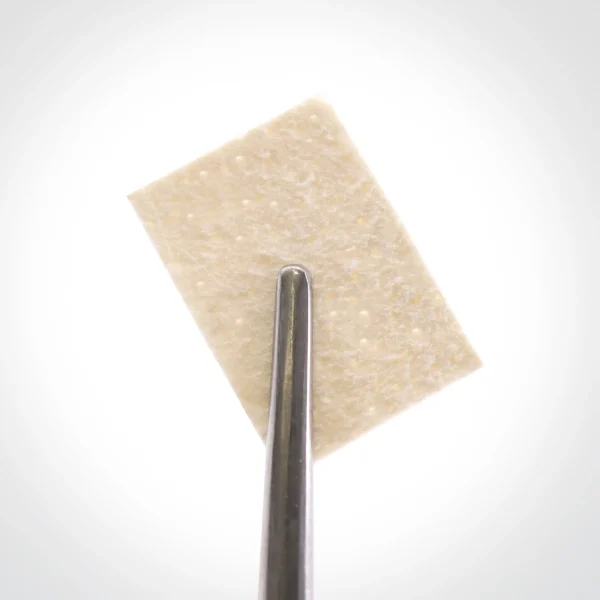
The acellular dermis membrane collagen membrane, contains basement membrane on one of its surfaces. It can provide a dense and impenetrable layer against microorganism and pathogen penetration into deeper layers.
So the membrane surface can stay exposed in high-perfused tissue of the oral cavity. The product origin is the collagen membrane (skin dermal layer), which consists of strong collagen type I and III fibers that strengthen the product, and also elastic fibers causing flexibility. This collagen membrane results in product’s unique features.
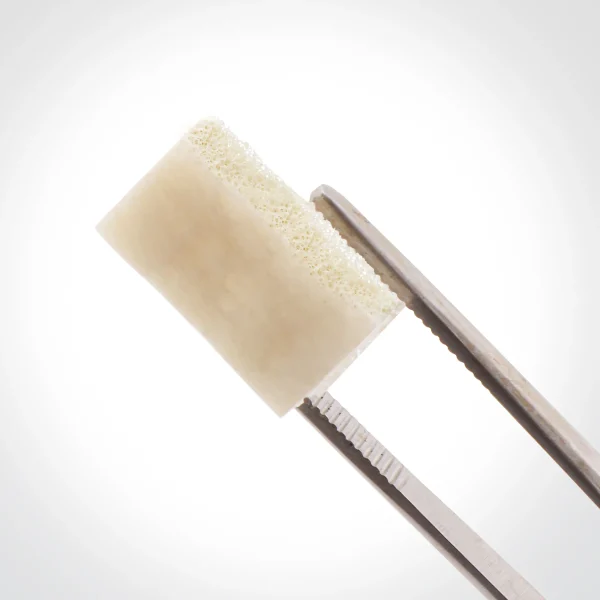
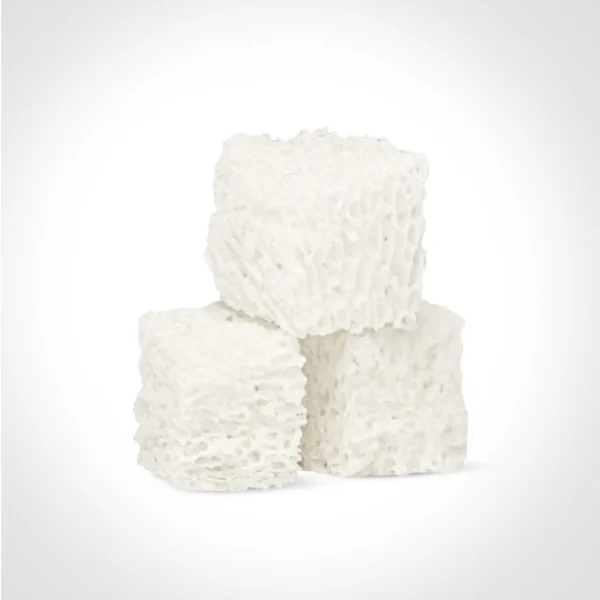
Freeze-dried bone allograft as Bone grafting such as Cube, Matchstick and Block forms has revolutionized orthopedic and maxillofacial surgeries, offering distinct advantages due to their unique compositions. Cube and Matchstick configurations consist solely of cancellous bone, while block formations comprise a core of cancellous bone enveloped by a cortical surface. These allograft are meticulously processed to decellularization and ensure sterilization. The resulting grafts provide essential structural support and seamlessly integrate with the recipient’s bone, promoting the formation of new bone.
Cube and block bone allografts effectively address osseous deficiencies caused by various conditions, from post-traumatic injuries to degenerative diseases and reconstructive procedures. In dental implantology, they serve as a reliable scaffold for augmenting deficient mandible and maxilla structures and facilitating successful implant placement. Moreover, in reconstruction surgeries, these grafts significantly contribute to restoring maxillofacial and skeletal, enabling patients to regain both physical form and function.
Ongoing refinement of bone grafting techniques, along with continued research and innovation, will further enhance the applications and outcomes of cube and block bone allografts, elevating the standard of care in orthopedic and maxillofacial surgeries.